
Animal-Assisted Speech Therapy
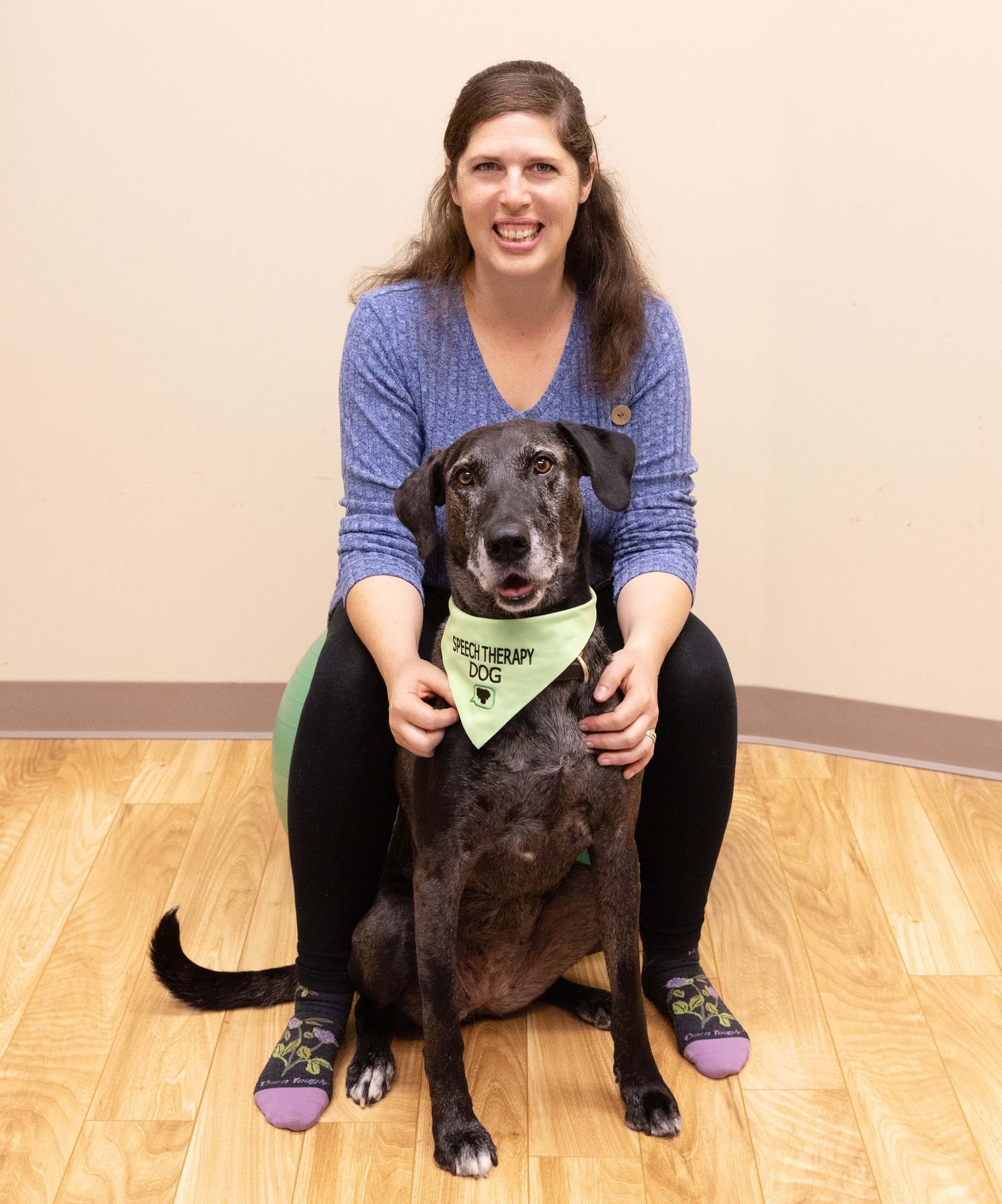
Delta, who started my journey into animal-assisted therapy in 2019. She passed in 2026, but her legacy lives on in speech therapy dogs Sky and Zephyr, shown below.
A speech therapy dog can be incorporated to:
calm and engage children who are hyperactive and/or avoidant
stimulate children with low levels of responsiveness
motivate children for additional practice
ease transitions between activities as well as into and out of therapy sessions
reduce stress in caregivers and siblings
practice difficult skills without fear of judgment
provide meaningful contexts for practicing a new skill
provide memorable learning experiences for greater carryover
Please note that if you or your child have dog fears, allergies, or an immunocompromised status, animal-assisted speech therapy would not be a good fit and you should find services elsewhere. If you need help finding a provider, please feel free to contact me.
In a typical session, my therapy dog will greet families at the door and help transition a child into the session.
From there, they may rest on their bed or next to the child as they work, or be called upon to engage more actively as needed.
My therapy dogs have the agency to consent to interactions or withdraw as they see fit.
While I bring a therapy dog with me most days, I cannot guarantee they will be there for every session or engage with every child.
Meet the dogs
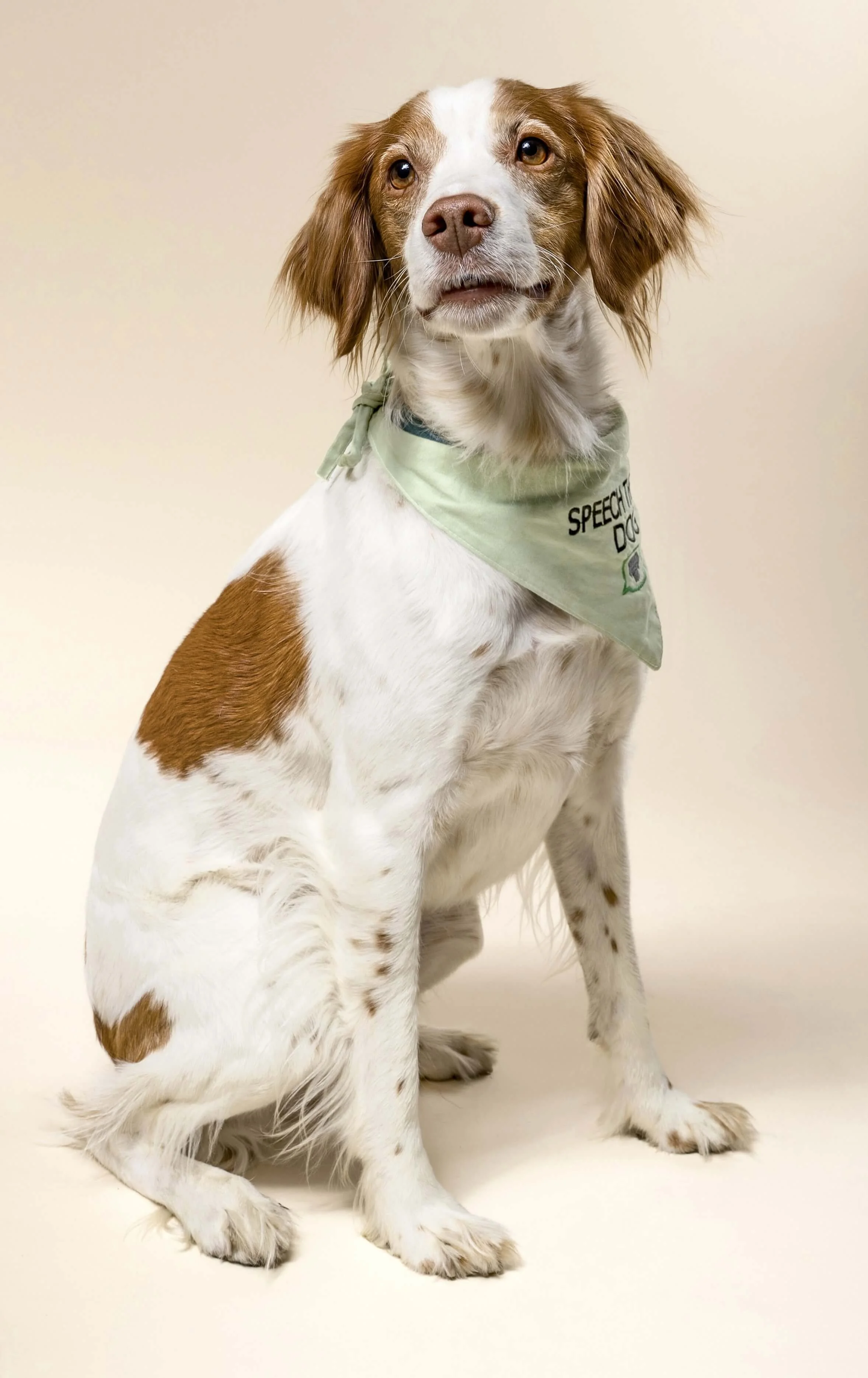
Sky
Sky is a Brittany Spaniel, born in 2021. She brings a high-energy enthusiasm to sessions and loves to give kisses, play fetch, and perform tricks.
Zephyr
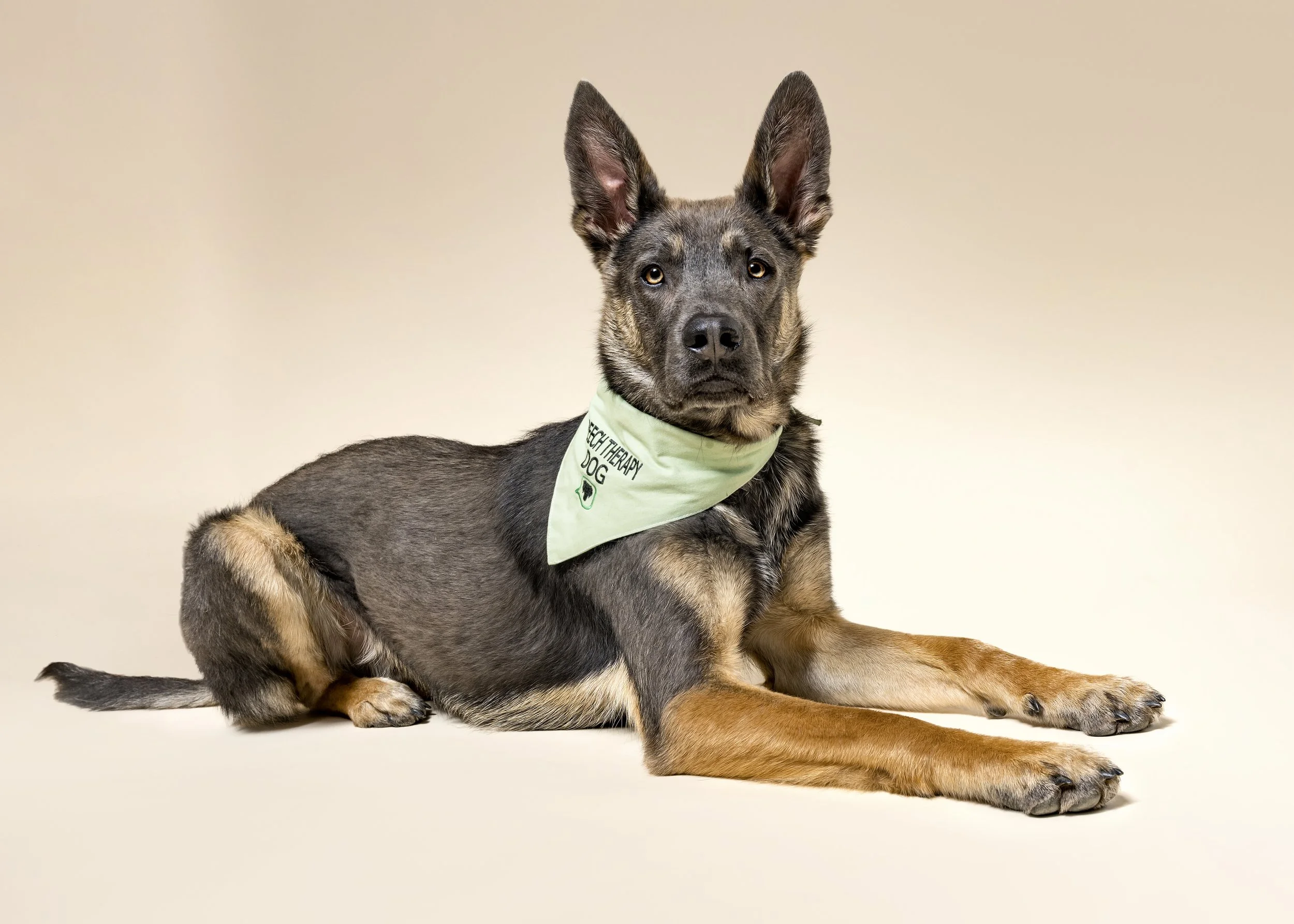
Zephyr is German Shepherd mix, born in 2024. He is still maturing into his role, but loves to be included in activities and is able to adapt his role depending on the needs of the child.
Both Sky and Zephyr have passed the Association of Animal-Assisted Intervention Professionals Therapy Animal Team certification.